Sunday, 17 November 2013

FINAL SUBMISSION

IMAGES


 STRATEGY STATEMENT
Given the unusually overengineered structure of Rudin House and its concrete shell, my investigation into decay will focus on the permanence of the skeletal concrete structure and the breakdown of everything else. Timber and glass will not maintain integrity in a natural environment with no maintenance. In addition the landscape itself will overtake the built form, with flows of sand and new vegetative growth.

CRYENGINE FOLDER
Cryengine SDK zip is available here:

https://www.dropbox.com/sh/w3swsi4a0z46cjs/9_Sg8sr-HD

TRAILER


EXP02 Week 5

INTERACTIVE STRATEGY STATEMENT


LECTURE REFLECTION

EXP02 Week 4

BLEND LAYER IMAGES


TRAILERS


LECTURE REFLECTION

EXP02 Week 3

THINKING ABOUT DECAY

Sketches

Reference Images


PROGRESS IMAGES


STRATEGY STATEMENT

Given the unusually overengineered structure of Rudin House and its concrete shell, my investigation into decay will focus on the permanence of the skeletal concrete structure and the breakdown of everything else. Timber and glass will not maintain integrity in a natural environment with no maintenance. In addition the landscape itself will overtake the built form, with flows of sand and new vegetative growth.

LECTURE REFLECTION

EXP02 WEEK 2

BEFORE AND AFTER MAPS


NEW BUILDING


MATERIAL PROPERTIES


CONCRETE

STEEL

GLASS


LECTURE REFLECTION

EXP02 Week 1

EXPORTED OBJECTS


BUILDING BACKGROUNDS:


RUDIN HOUSE
Designed by Herzog and De Meuron Rudin house is notable in the context of this assignment for its unusual construction. Its form is of a sort of idealised 'cartoon house' but much of its construction is heavily reinforced concrete. The support of the house on pillars leads to some interesting possibilities for its decay.

BARCELONA PAVILION
The Barcelona Pavilion was a temporary structure designed by Mies Van der Rohe. It was demolished in 1930 and reconstructed in 1986. Especially notable in the context of this assessment for the water used on site and the faux-monolithic marble walls.

HOUSE AT BORDEAUX
The House at Bordeaux is a Koolhaas building from the 90s. It is especially notable in this context for the extensive use of large aluminium components in its construction, unusual for a building of this type.

LECTURE REFLECTION

The concept of the decay experiment is very interesting to me. I've always been interested in the archaeological remnants left behind by other civilisations and I think its both valuable and humbling to spend some time thinking about what we are leaving behind for future generations and beyond. I think its interesting that Russell chose the buildings shown for this experiment given that they're very much atypical in terms of modern residential construction. Its possible that in 100 years without maintenance most of our own softwood frame detached homes won't have much structure left to them at all. 

Monday, 7 October 2013

Strategy Statement


The first revealing of the motif comes in the sublime reveal of the massive scale of the island and its wild nature.

In the most literal interpretation of the 'e1' , the writing on the beach the protagonist is calling out in a direct way to the viewer. He is building up the E and the 1 is formed by the existing line of rock.

A recurring theme is the contrast between the presentation of the motif in the beginning as a man-made relic of the protagonists past. As the narrative progresses and the protagonist adjusts to his environment there is a transition to natural elements as in the vegetation and fallen trees. This transformation from the civilised to the wild is the key message of the work.

Monday, 16 September 2013

SDK Folder

Cryengine SDK zip is available here:

https://www.dropbox.com/sh/w3swsi4a0z46cjs/9_Sg8sr-HD

Saturday, 14 September 2013

Island Video


This is the final edit of the video to showcase my island. There were some issues with different resolutions in the final cut that I wasn't able to resolve in time. Other than that i'm very happy with how it turned out.

When we first began the course I was very impressed with cryengine as a worldbuilding tool but it wasn't until I began to put this video together that i realised how many tools there are available for things like this animation. It seems likely that in the future a lot of current animation work might move into this sort of real-time editing environment with a large library of assets and intuitive controls for lighting, cameras, effects etc.

Revealing Letter+Number


Monday, 12 August 2013

Week 3 Lecture Reflection

As a landscape architect it is very interesting to link the works of people like Capability Brown to the digital landscape. The idea of 'constructing' a landscape as being a kind of virtual unreality was very resonant.

Texture Applied to Island


Second Island


Custom Terrain Texture

The texture I developed was a sedimentary eroded rock texture with a reddish hue, suitable for the canyon-like landscape of my second island.


Week 02 Lecture Reflection

The idea of extreme realism in full cgi as shown in Alex Roman's work is very interesting to me personally. Within a decade its likely that this level of detail will be achievable for a much wider range of applications. I hope to be pushing this boundary in the field of landscape architecture.

Framing Views / The Picturesque


Humphry Repton
This image tries to capture the drawing of the eye up the river/path to an elevated focal point.


JMW Turner
 The layering of fore, middle and background elements across the page.

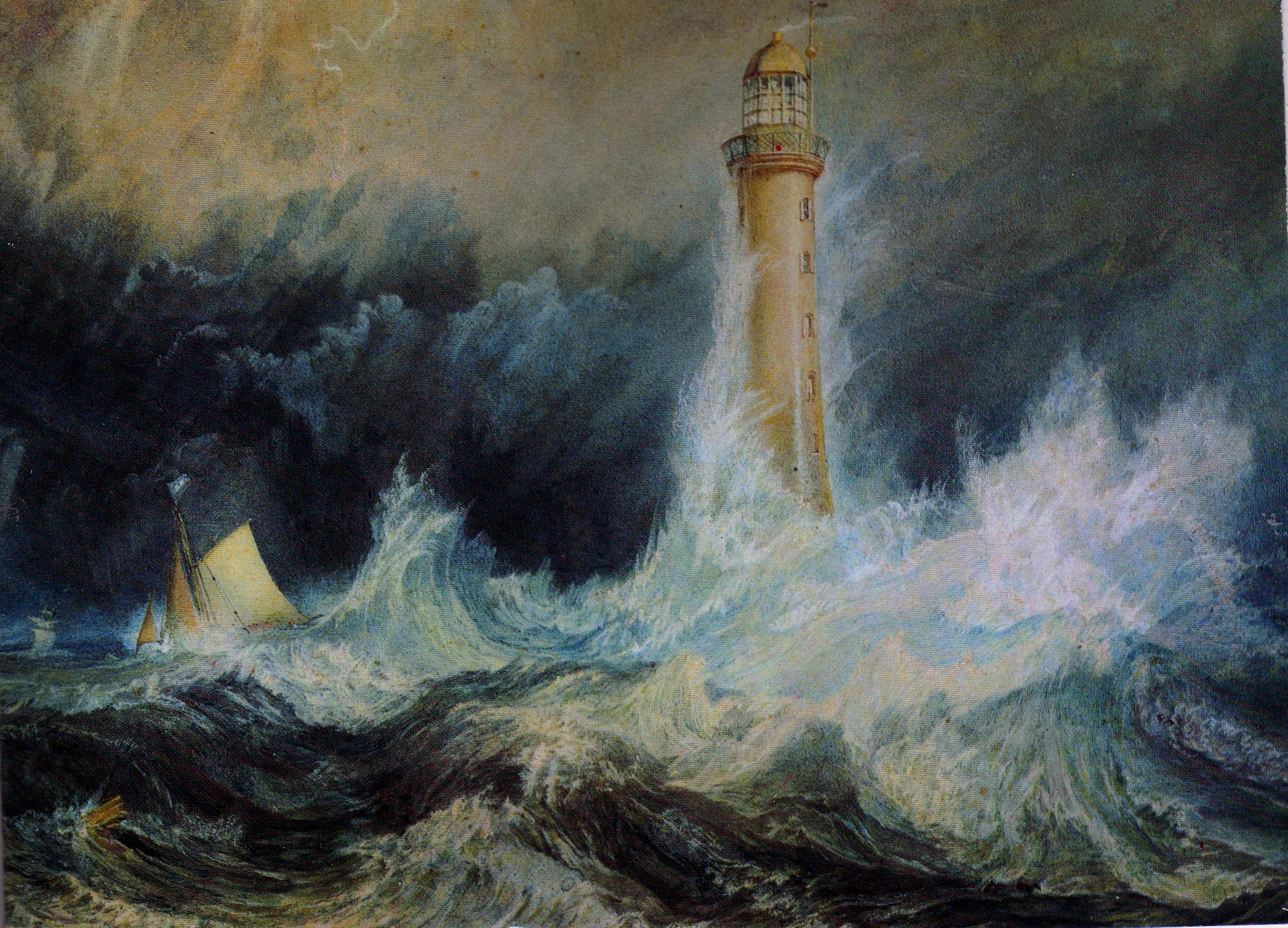
JMW Turner
The vertical dominance of the lighthouse drawing the eye up.


William Gilpin
The conditions at the edge of a form and its sharp return.


Monday, 5 August 2013

First Images of the Island

                                                                           Exploring
                                                                          Expansive
                                                                          Exposed
                                                                          Sheltered
                                                                         Emerging

5 Landscapes for Crysis

1.  Basalt Formation Coastline
 Hard edged geometric basalt structures. No vegetation. Near midday overhead lighting, hard sun on a bright day.


2. Cliffs of Santorini

Vegetation is grass or scrub, only existing on slopes of less than approx 45 degrees. Possible afternoon sun providing shading on cliffs. Tiered erosion and scree with a lot of scree/sediment pouring down slopes and smoothing them.

3. Field/Forest


 Smooth gradient with heavy grass covering. A few scattered rocks with smooth edges. Dense stands of upright trees. Soft overhead lighting, midday.

4. Canyon
 Hard eroded layers of rock provide bands of colour. High gradient canyon walls, possibly eroded by extinct river. Vegetation is sparse and limited to relatively flat areas.


5. Smooth Rock Beaches, WA
Smooth coastal rock erosion. Probably has been eroded over a long period of time after formation. Dense green vegetation on slopes <70 degrees. Midday sun lighting, no clouds in sight.

5 Useful Cryengine Sandbox Shortcuts

1. Snap to grid is toggled by pressing the G key.

2. After selecting an object it can be moved to the cursor position with ctrl-shift-click.

3. Camera positions can be saved with ctrl+f* and recalled with shift+f*.

4. Pressing ctrl-C will create a clone of the selected object.

5. ctrl-g takes the user into 'Game Mode'.